New F1 Regulations Set Stage for Australian GP Start Chaos
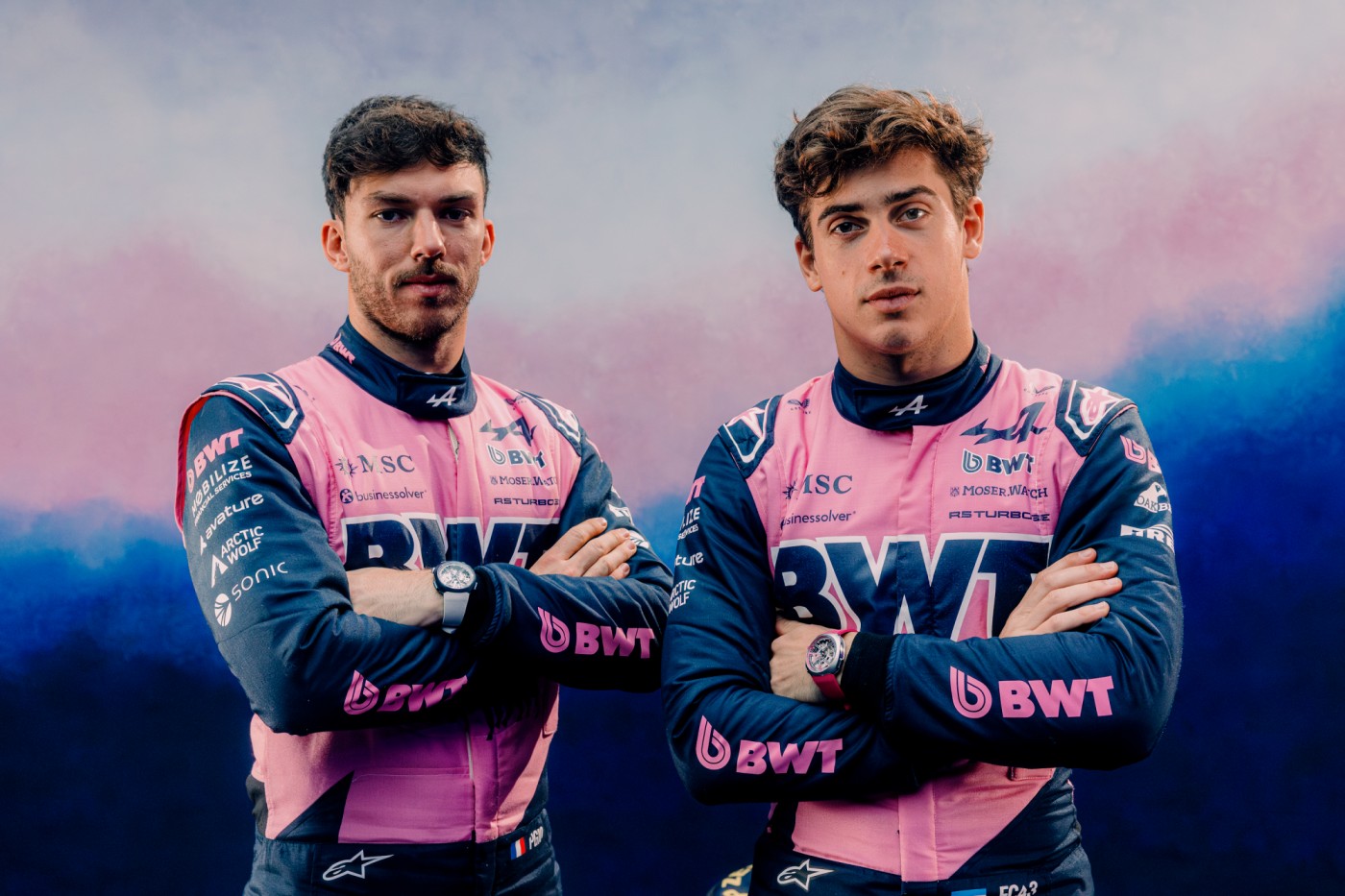
Formula 1 is a sport constantly pushing the boundaries of technology, and with each new season comes a fresh set of regulations designed to evolve the competition, challenge engineers, and sometimes, even level the playing field. However, these changes can also introduce an element of unpredictability, especially in crucial moments like the start of a Grand Prix. As the Formula 1 circus gears up for the highly anticipated Australian Grand Prix, one driver in particular has sounded a significant alarm regarding the opening moments of the race: Alpine's Pierre Gasly.
Gasly, known for his candid insights, has issued a stark warning to fans and competitors alike, suggesting that the start of the Australian GP could be "one everybody remembers." This isn't just hyperbole; it's a calculated assessment based on fundamental shifts in both engine and chassis regulations for the current season. The implications for the Gasly GP Austrália start are profound, potentially setting the stage for one of the most unpredictable and chaotic opening laps in recent memory. Drivers, teams, and fans are bracing themselves for what could be a thrilling, if turbulent, curtain-raiser in Melbourne.
The Technical Underpinnings of Potential Chaos: Engine Regulations
The primary source of Gasly's concern on the engine front stems from the removal of the MGU-H (Motor Generator Unit – Heat) from the power unit architecture. For years, the MGU-H played a critical role in recovering energy from the exhaust gases, significantly aiding turbocharger spooling and allowing for a broader operational window. Its removal fundamentally alters how F1 cars manage their power delivery, particularly during the crucial start sequence.
Without the MGU-H, the internal combustion engine (ICE) now bears a greater responsibility for bringing the turbocharger up to its optimal operating speed. This translates to drivers needing to reach higher engine revs for a longer period before the actual launch, a delicate balancing act that demands extreme precision. The process is inherently more difficult, increasing the risk of what F1 insiders call a "slow getaway" or, even worse, the car going into "anti-stall."
A slow getaway can cost multiple positions before the first corner, while an anti-stall situation can effectively end a driver's race before it even properly begins, leaving them vulnerable to the oncoming pack. Imagine 20 cars, each driver trying to thread this almost invisible needle between perfect launch and catastrophic failure, all within a fraction of a second. The pressure is immense, and the margin for error is razor-thin. This intricate dance between driver input and mechanical response is what makes the Gasly GP Austrália start particularly fraught with peril.
The challenge lies in finding the perfect clutch bite point, modulating throttle input, and managing the turbo lag, all without the sophisticated assistance of the MGU-H. It's a return to a more raw, driver-dependent start, echoing an era where launches were often more varied and less predictable. While teams have been working tirelessly in simulations and practice to master this new dynamic, the pressure of a real race start, surrounded by competitors, is an entirely different beast.
Active Aerodynamics and the Downforce Dilemma
Beyond the engine woes, the chassis side of the regulations introduces another layer of complexity, particularly as cars hurtle towards the first corner. Oscar Piastri, the home hero and McLaren driver, eloquently articulated this concern: "A pack of 22 cars with a couple hundred points less downforce sounds like a recipe for disaster to me."
Piastri's comment hints at potential changes related to the use of active aerodynamics, particularly concerning the DRS (Drag Reduction System) or other adjustable aero elements before Turn 1. If cars are permitted or compelled to use these systems early, or if general downforce levels are intrinsically lower due to regulation changes, the implications for stability and braking in a congested field are significant. Less downforce means less grip, making the cars harder to control, especially under heavy braking and turning into a tight corner like Albert Park's Turn 1.
Consider a scenario where cars are closely packed, jostling for position, all on cold tires at the start of the race. If they also have significantly less aerodynamic grip, the risk of locking up brakes, understeering wide, or even making contact due to reduced stability skyrockets. The aerodynamic wash from cars ahead can already destabilize a following car; add reduced intrinsic downforce, and the situation becomes exponentially more challenging. This creates a terrifying prospect for the Gasly GP Austrália start, where even a slight misjudgment can trigger a chain reaction.
This challenge not only tests the drivers' raw skill and reflexes but also the teams' ability to find a setup that balances outright speed with crucial stability for the opening lap. The strategic choices made on wing levels and suspension settings could prove pivotal in navigating the initial scrum without incident.
A Driver's Perspective: Strategy, Skill, and the Human Element
Pierre Gasly's seasoned perspective offers valuable insight into the mindset required for such a start. He expressed his personal anticipation, stating that if he weren't on the grid himself, he would "eagerly watch the start." This underscores the inherent drama and unpredictability he expects. Gasly's decision to "cautiously refrain" from elaborating too much on his warning that it "could be one that everybody remembers" suggests a deeper understanding of the risks, perhaps even confidential team insights he can't fully disclose.
The human element here is paramount. Drivers will be pushing their machines to the absolute limit while simultaneously exercising immense restraint and judgment. The ability to read the intentions of cars around them, anticipate gaps, and react instantaneously to unexpected movements will be crucial. This isn't just about raw speed; it's about race craft, psychological fortitude, and a deep understanding of the car's nuanced behavior under pressure.
Teams, of course, are not sitting idly by. They will be pouring over telemetry, conducting countless practice starts in simulated environments, and refining launch control systems to provide their drivers with the best possible tools. However, as Gasly himself noted, even with all the preparation, the real race start is "definitely going to be more tricky than it used to be." Despite the immediate challenges, Gasly also expressed a belief that all F1 teams would eventually "figure out how to take proper starts 'in the space of a couple of races.'" This suggests an initial period of high volatility, followed by an adaptation phase as teams and drivers master the new conditions. For a deeper dive into Gasly's reasoning, you might find this article insightful: Why Pierre Gasly Expects Chaotic Australian GP Starts.
What This Means for the Fans and the Spectacle
For the millions of F1 fans around the globe, Gasly's warning is less a cause for alarm and more an invitation to witness potential history. His advice, "I advise you to be sitting with your TV on in Australia, because it could be one that everybody remembers," perfectly encapsulates the heightened anticipation. Chaotic starts, while potentially dangerous, are often the most thrilling moments in motorsport, offering dramatic overtakes, unexpected incidents, and immediate shake-ups to the grid order.
The first few corners of the Gasly GP Austrália could redefine early-season narratives, propel dark horses into unexpected positions, or claim favored contenders prematurely. It adds a layer of raw, unscripted drama that is often missing from later stages of a race once the field has spread out. Viewers will be scrutinizing every move, every twitch of a car, every flash of anti-stall lights, knowing that a single error could have huge consequences.
This shift towards a more unpredictable start aligns with F1's desire to enhance the spectacle and keep fans on the edge of their seats. While safety is always paramount, a touch of controlled chaos at the start can make for unforgettable viewing. It forces drivers to prove their mettle from the very first moment the lights go out. To get more of Gasly's perspective on this, check out: Pierre Gasly Warns: Australian GP Start Will Be Chaotic.
Conclusion
Pierre Gasly's timely warning regarding the Australian Grand Prix start serves as a powerful reminder of the ever-evolving nature of Formula 1. The combination of new engine regulations, particularly the MGU-H removal, and potential chassis implications like reduced downforce, creates a cocktail of factors ripe for an unpredictable opening lap. While teams and drivers will work tirelessly to mitigate the risks, the inherent challenges mean that the lights-out moment in Melbourne will be more critical and potentially more chaotic than ever. For fans, it's an unmissable spectacle, promising high drama and potential history-making moments from the very first green light. Whether it's a testament to driver skill or a catalyst for early-race pandemonium, the Australian GP start is set to be truly memorable.