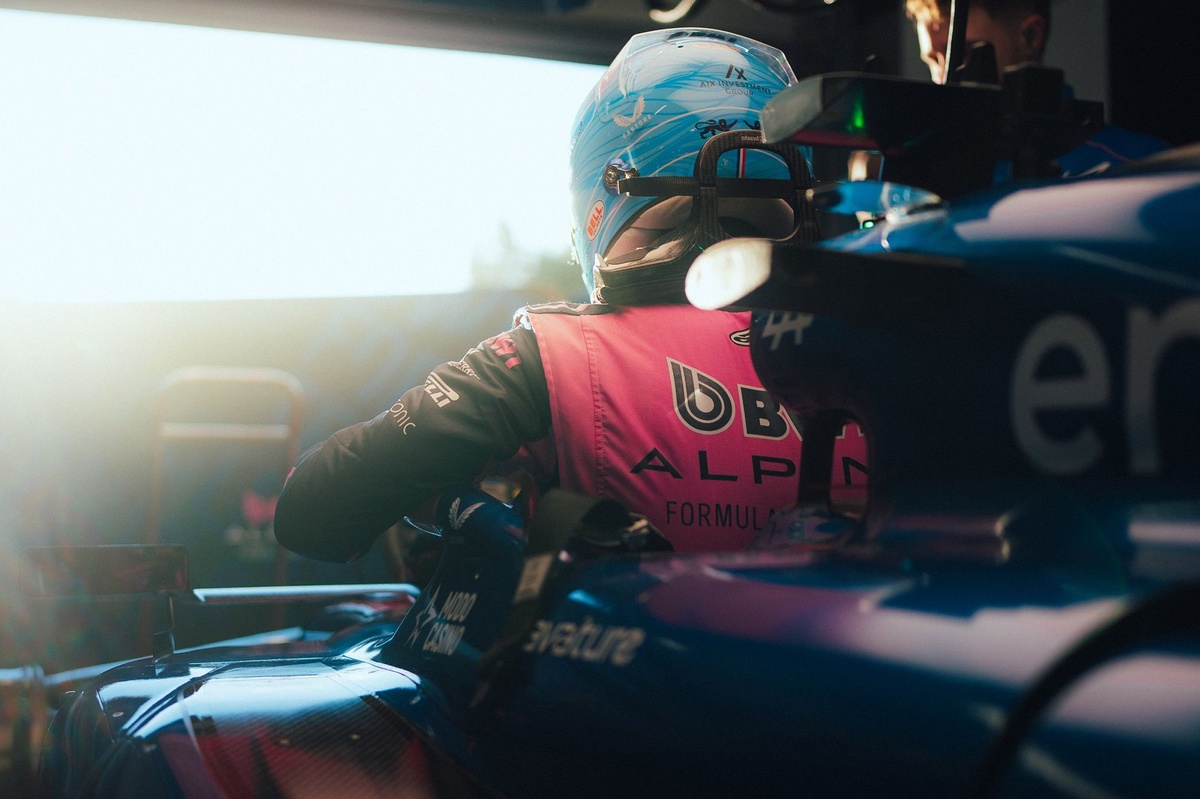
Pierre Gasly, the candid Alpine driver, has delivered a striking pre-race warning that has set the Formula 1 world abuzz: the start of the Australian Grand Prix could be “one that everybody remembers.” This isn’t merely pre-race hype; it’s a seasoned driver’s insight into a potentially volatile cocktail of new regulations, a demanding circuit, and the inherent unpredictability of 20 cars battling for prime position when the lights go out. For fans and analysts alike, the Australian GP start promises to be a spectacle unlike any other, demanding attention from the very first moment.
The Anticipation of Anarchy: Gasly's Bold Prediction for the Australian GP
Gasly’s words are not just a prediction; they are a direct challenge to viewers: “I advise you to be sitting with your TV on in Australia, because it could be one that everybody remembers.” This isn't a throwaway line; it comes from a driver who has experienced the full spectrum of Formula 1 starts, from clean getaways to chaotic multi-car incidents. His eagerness to watch the start, even if he weren’t directly participating, underscores the significant level of uncertainty he perceives for the Gasly GP Austrália.
What makes Gasly so confident in this prophecy of pandemonium? It stems from a confluence of factors, primarily rooted in the significant chassis and engine regulation changes implemented for the new season. These aren't minor tweaks; they fundamentally alter how cars behave during the crucial launch phase, adding layers of complexity and risk that drivers and teams are still grappling with. The stakes are incredibly high, as a clean start can make or break a race, especially on a circuit like Albert Park where overtaking can be challenging.
Unpacking the New F1 Regulations: A Recipe for Race Day Drama
The core of Gasly's warning lies in two key regulatory shifts that directly impact the start sequence:
1. Engine Regulations: The MGU-H Removal and Its Aftermath
The most significant change on the power unit front is the removal of the MGU-H (Motor Generator Unit – Heat). This component previously played a crucial role in spooling the turbo, helping cars quickly reach their optimal power band for a clean getaway. With its removal, the responsibility for initiating turbo boost has shifted almost entirely to the internal combustion engine (ICE). This means:- Higher Revs, Longer Hold: Drivers now need to hold higher revs for a longer period before the actual launch to ensure the turbo is sufficiently spooled. This delicate balance requires extreme precision.
- Tricky Operational Window: The window for a perfect launch has narrowed considerably. Too low revs, and the car bogs down. Too high, and it risks wheelspin or hitting the rev limiter prematurely.
- Increased Anti-Stall Risk: The process is far more susceptible to errors, increasing the chances of cars going into anti-stall mode – a sudden power cut that effectively ends any chance of a competitive start. A car suffering anti-stall can become a moving chicane, a major hazard in a densely packed grid.
2. Chassis Regulations: Active Aerodynamics and Downforce Concerns
On the chassis side, the discussion around potential active aerodynamics has raised eyebrows, particularly concerning its use before Turn 1. Alpine driver Oscar Piastri articulated the collective unease perfectly:“A pack of 22 cars with a couple hundred points less downforce sounds like a recipe for disaster to me.”
This reduction in downforce, combined with the inherent challenges of launching a high-performance F1 car, presents a terrifying scenario. Less downforce means less grip, making cars harder to control, especially when drivers are jockeying for position and pushing the limits of adhesion. A slight miscalculation in braking or steering in a chaotic pack with reduced grip could easily trigger a multi-car pile-up. The early laps of the gasly gp austrália could be a true test of nerve and precision.
Beyond the Grid: Why Melbourne's Start is Uniquely Challenging
While new regulations are a primary driver of the anticipated chaos, the Australian Grand Prix circuit itself adds another layer of difficulty to the opening lap. Albert Park is a semi-street circuit, and as such, it often presents a "green" track surface at the start of the race weekend. This means:
- Low Grip: With less rubber laid down, initial grip levels are lower, making launches and early braking even more precarious.
- Tight Turn 1: Melbourne's Turn 1 is a relatively tight right-hander that quickly narrows after a long run down to it. This creates a natural bottleneck where drivers are often three or four abreast, all vying for the same piece of tarmac.
- First Race Jitters: As the season opener, the Australian GP carries an extra weight of expectation. Drivers are eager to make a strong impression, but also to finish cleanly. This combination of ambition and caution can sometimes lead to indecision or over-aggression, both of which are recipes for trouble.
- Cold Tyres and Full Fuel: Cars start with cold tyres and full fuel loads, making them heavier and less agile. This further exacerbates the grip challenge in the critical opening moments of the gasly gp austrália.
These factors, combined with the regulatory changes, create a perfect storm of uncertainty. Even the most experienced drivers will be treading a fine line between gaining an advantage and avoiding an early exit.
Strategies for Survival: Navigating the Chaotic Gasly GP Austrália Start
Given Gasly’s stark warning, what strategies might teams and drivers employ to survive, and perhaps even thrive, in what could be a truly memorable start?
Driver Mindset: Aggression vs. Conservation
Drivers will face an immediate dilemma: push hard to gain positions, or exercise caution to avoid an incident? The ideal approach for the gasly gp austrália will likely involve a calculated risk. Those starting further down the grid might be more aggressive, sensing an opportunity to make up places, while front-runners may prioritize protecting their position and avoiding damage. Gasly, himself, will have to balance his natural competitive instinct with the need to bring his Alpine home in one piece.Team Preparations: Data and Practice
Teams will have been meticulously analyzing data from pre-season testing, simulating countless start scenarios. However, the true test comes under race conditions. Limited practice starts during a race weekend mean drivers have fewer opportunities to perfect their technique with the new regulations. Expect constant communication between engineers and drivers, providing real-time feedback and strategy adjustments.The Learning Curve: Adaptation is Key
Gasly acknowledges that "all F1 teams will figure out how to take proper starts 'in the space of a couple' of races." This highlights the learning curve involved. The Australian GP is the first exam, and those who adapt fastest to the new launch protocols will undoubtedly have an advantage. Early season races often see a higher incidence of first-lap incidents as everyone is still getting to grips with their machinery and the new rules.For the gasly gp austrália, the ability to read the unfolding chaos, react instantly, and execute a clean, precise launch will be paramount. Expect some surprising movers and shakers, and unfortunately, likely some early retirements too.
The Spectator's Guide to the Gasly GP Austrália: What to Watch For
If Pierre Gasly's warning holds true, the start of the Australian GP will be unmissable. Here’s what viewers should keep an eye on to fully appreciate the unfolding drama:
- Bogged Down Cars: Watch for cars that appear to struggle off the line, potentially suffering from anti-stall or simply not getting enough initial drive. These can quickly become obstacles.
- Wheelspin and Smoke: Excessive wheelspin indicates a driver struggling for grip or applying too much power. This might be more prevalent than usual due to the engine regulation changes.
- The Run to Turn 1: Pay close attention to the sheer density of cars heading into the first corner. The reduced downforce, combined with the tight nature of Turn 1, creates a high-risk scenario for contact. Look for bold overtakes, defensive maneuvers, and any signs of instability.
- Mid-Pack Mayhem: While the front of the grid gets a lot of attention, the mid-pack is often where the real chaos erupts. Drivers here are often more desperate for positions and have less clear air.
- Onboard Cameras: If available, switch to onboard cameras for a visceral experience of the G-forces, the frantic steering adjustments, and the sheer bravery involved in navigating a chaotic start.
- Commentary Cues: Listen closely to the commentators. They will be highlighting any issues, driver struggles, and key moments as they happen.
This isn't just a race; it's a high-stakes gamble on the very first lap. Gasly’s warning serves as a siren call for every F1 enthusiast to be ready, because the gasly gp austrália start truly could be one for the history books.
The Australian Grand Prix promises an exhilarating start to the new Formula 1 season. Pierre Gasly’s warning about a chaotic and memorable opening lap isn't just speculation; it's a well-informed assessment based on significant regulatory changes and the inherent challenges of the Albert Park circuit. From the complexities of the new engine starts to the concerns over active aerodynamics and reduced downforce, every element points towards an unpredictable and thrilling beginning. For fans, it's a clear instruction: be ready, be watching, and prepare for a spectacle that could define the early narrative of the championship. The stage is set for a truly unforgettable moment when the lights go out in Melbourne, making the gasly gp austrália a must-watch event for anyone who loves the unpredictable drama of Formula 1.